🤸Can a Gym for Mobility Help With Pain and Injuries?
If you are dealing with stiffness, tight joints, old niggles, or pain that keeps coming back, a gym for mobility can be a very smart place to start.
A lot of people think mobility work is just stretching. It is not.
A good gym for mobility helps you move better, build control, improve strength in the right places, and train in a way that supports your body instead of fighting against it.
That matters because many aches and small injuries do not come from movement itself. They come from poor movement, poor recovery, and trying to do too much with a body that is not ready.
So, can a gym for mobility help with pain and injuries?
In a lot of cases, yes. Not by offering a magic fix, but by helping you move with better control, better balance, and less stress through the joints that are struggling.
🔍 What a Gym for Mobility Actually Helps With
A gym for mobility is not just for people who want to touch their toes or squat deeper.
It can help people who:
🤕 feel stiff in the hips, shoulders, or back
⚠️ keep picking up small injuries
🪑 struggle with poor posture
💻 feel tight after sitting all day
😬 want to train but do not trust their body
💤 feel sore longer than they should after workouts
The goal is simple. Help your body move the way it is supposed to move.
That usually means improving:
🦴 joint control
↔️ range of motion
💪 basic strength
🧱 stability
🧠 coordination
🔄 recovery between sessions
When those things improve, everyday movement often feels easier. Training feels smoother too.
🚶 Why Pain and Injuries Often Need Better Movement, Not Less Movement
A lot of people respond to pain by doing less and less.
Sometimes short-term rest makes sense. But in many cases, staying completely inactive for too long can make things worse. You get stiffer, weaker, and less confident in your movement.
That is where a gym for mobility can help.
Instead of throwing you into hard workouts, it gives you a way to rebuild trust in your body. You start with movements you can control. Then you build from there.
That does not mean every injury should be trained through. It means the right kind of movement is often part of the solution, not the problem.
If you want a simple breakdown of how soreness, recovery, and physical stress can build up in the body, our guide on inflammation explained will cover all the common questions people have.
🛠️ How a Gym for Mobility Helps You Train Safely
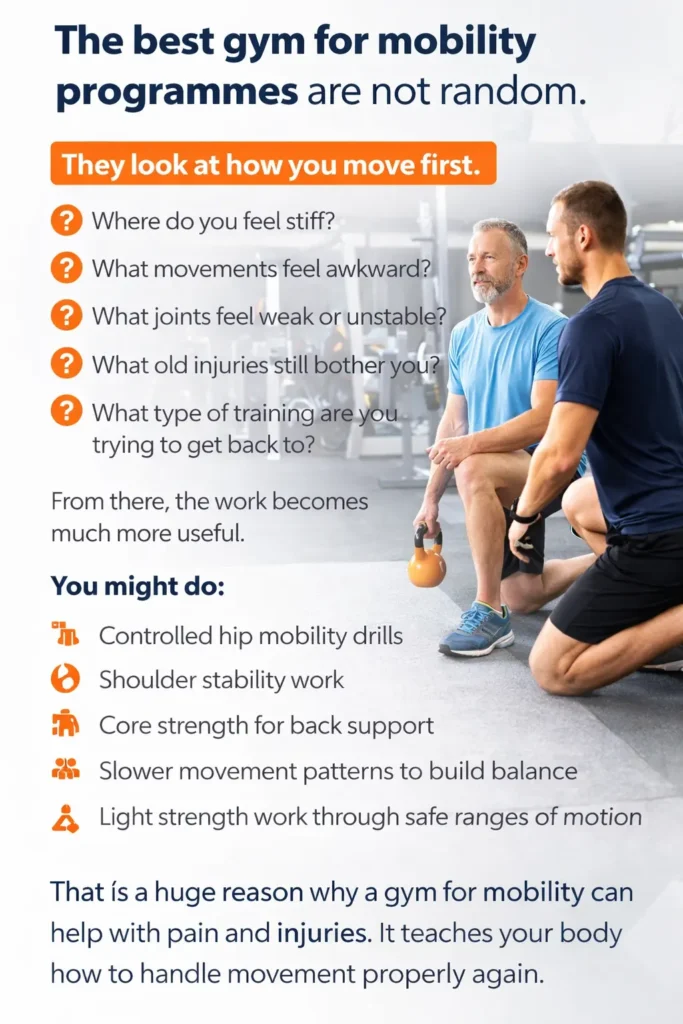
The best gym for mobility programmes are not random.
They look at how you move first.
That means asking questions like:
❓ Where do you feel stiff?
❓ What movements feel awkward?
❓ What joints feel weak or unstable?
❓ What old injuries still bother you?
❓ What type of training are you trying to get back to?
From there, the work becomes much more useful.
You might do:
🦵 controlled hip mobility drills
🙆 shoulder stability work
🧩 core strength for back support
🐢 slower movement patterns to build balance
🏋️ light strength work through safe ranges of motion
That is a huge reason why a gym for mobility can help with pain and injuries. It teaches your body how to handle movement properly again.
It also helps you spot the difference between:
🙂 normal discomfort from training
🧍 stiffness from lack of movement
🚨 warning signs that need more care
That is one reason our beginner guide on how to avoid injury at the gym is another must read that helps people understand how to train with more control from day one.
👥 Who Gets the Most Out of a Gym for Mobility?
A gym for mobility can be useful for more people than most think.
It is especially helpful for:
🌱 beginners who feel stiff and out of shape
🔁 people coming back after time away from the gym
💼 desk workers who sit for long hours
🏃 active people with recurring tightness
👨🦳 adults who want to stay mobile as they get older
😟 anyone who feels nervous about pain flaring up again
For these people, mobility training is not “extra”.
It is often the missing piece.
Sometimes the problem is not that someone is lazy or inconsistent. It is that training feels rough, recovery feels slow, and the body never feels ready. That is why our article on how to stay consistent with training will help break some of the common myths and beliefs surrounding consistency.
When movement feels better, consistency usually gets better too.
🏡 What to Look For in a Gym for Mobility
Not every gym does this well.
If you are looking for a gym for mobility, you want more than a few stretches at the end of a class.
Look for:
👨🏫 coaches who care about movement quality
📈 progressions for different ability levels
🤝 support around pain, stiffness, and confidence
🏋️ strength work that matches your current level
🪜 a plan that builds gradually
You do not need a place that smashes you into the ground.
You need a place that helps you move, build, and improve without feeling broken after every session.
That is why the right environment matters so much. If you are looking for a place that combines coaching, movement, and real support, Strength & Motion Academy is a natural next step.
⚖️ Can a Gym for Mobility Fix Everything?
No. And it should not be sold that way.
A gym for mobility is not a replacement for proper medical advice when something feels serious.
But it can be a very good way to improve how your body moves, reduce stiffness, build confidence, and stop small issues from turning into bigger ones.
That is a big win.
Sometimes people do not need harder training. They need smarter training.
They need to move better before they push harder.
They need more control before more load.
And they need a body that feels supported, not constantly irritated.
If you want an outside reference on how gentle movement can help with pain, the NHS guide on 10 ways to reduce pain is a useful read.
✅ Final Word
So, can a gym for mobility help with pain and injuries?
Yes, in many cases it can.
Not because it is a magic cure, but because better movement, better strength, and better control usually give your body a better chance to feel good and stay strong.
A gym for mobility can help you:
✅ move with less stiffness
✅ train with more confidence
✅ improve basic strength and control
✅ support recovery
✅ lower the chance of repeat problems
If your body feels tight, sore, awkward, or unreliable, that does not always mean you need to stop moving.
Sometimes it means you need to start moving better.